Top
 

Educating Billy


Appendix 1

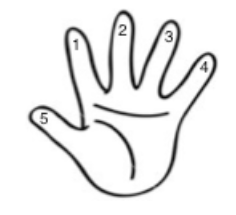
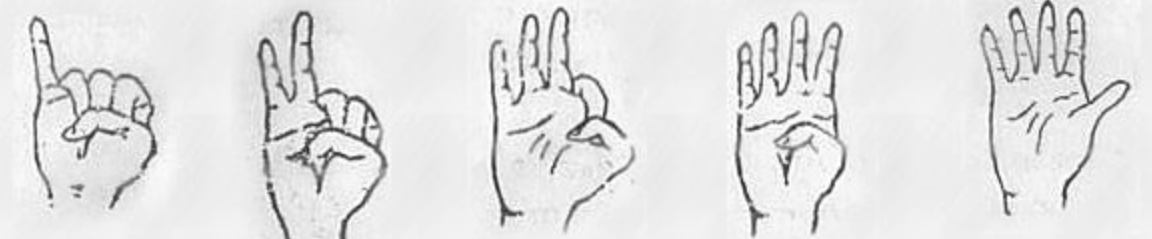
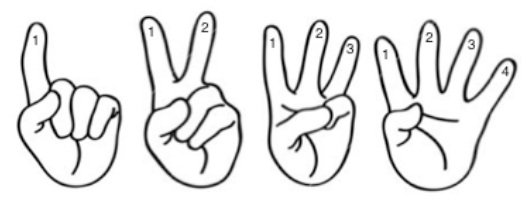
In the United States, numbers one through five are commonly represented using the following finger positions:

1: index finger

2: index & middle fingers

3: index, middle, & ring fingers

4: all finger except the thumb.

This creates a symbolic number line across the counter’s field of vision. However, the usual finger-counting convention extends the fifth finger in what would logically be the zero placeholder.

Representing a number line while aligning finger configurations with quantity introduces greater intentionality and clarity into mathematical practice.

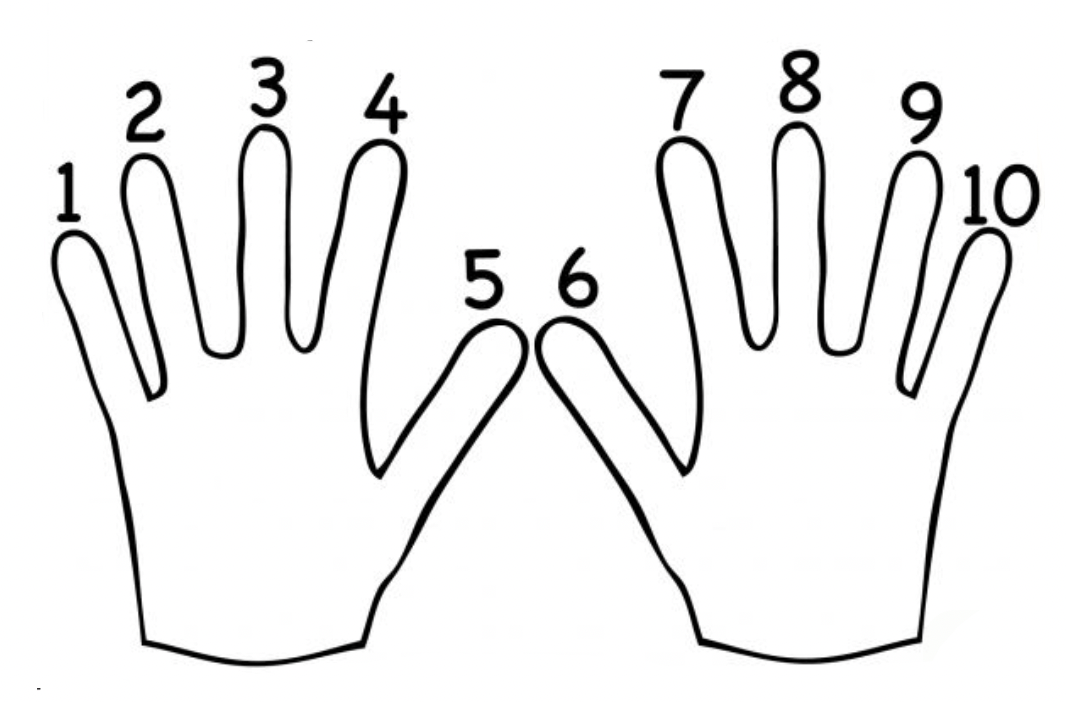
1: pinky finger

2: pinky & ring fingers

3: pinky, ring, & middle fingers

4: pinky, ring, middle, & index fingers.

5: an open hand.

When finger positions are matched intentionally to quantity, the number line becomes clearer and counting becomes more meaningful for young learners.

Numbers six through ten follow in linear order:
6: open hand and thumb

7: open hand, thumb, and index finger

8: open hand, thumb, index finger, and middle finger

9: open hand, thumb, index finger, middle finger, and ring finger.

10: Two open hands.


Appendix 2

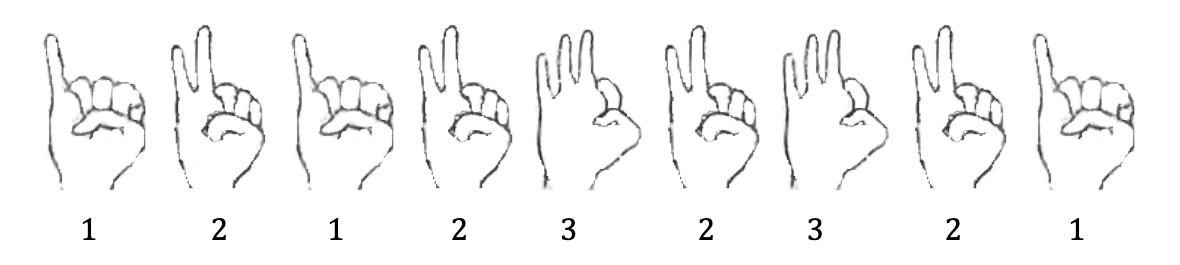
Once students can comfortably transition on the number line between 0 and 3, they are ready to work with the number line to four. After four, then five and so on to ten. It is better for a child to be able to count to a low number and comfortably change directions than it is for them to count linearly to a high number, without being able to change directions.


Appendix 3

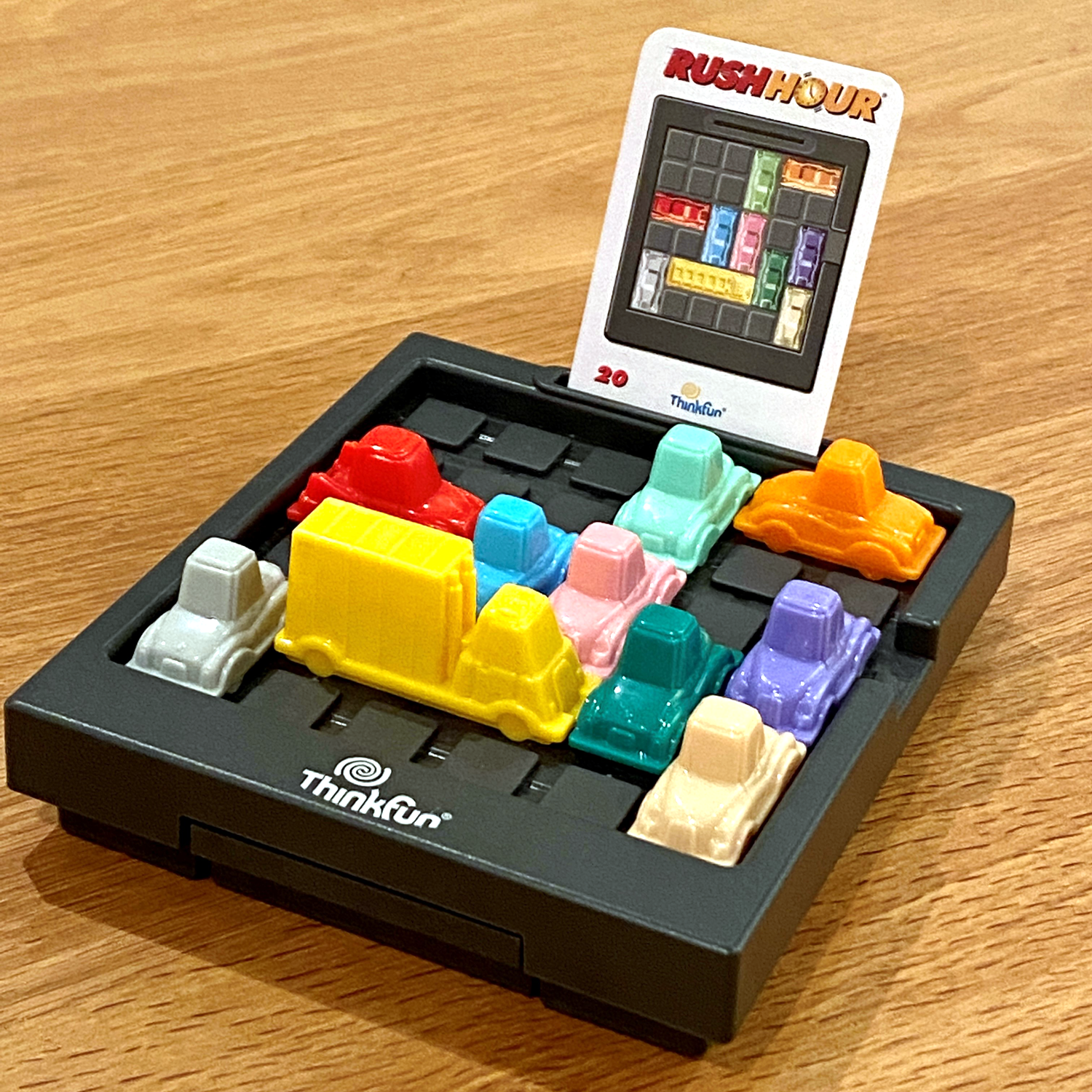
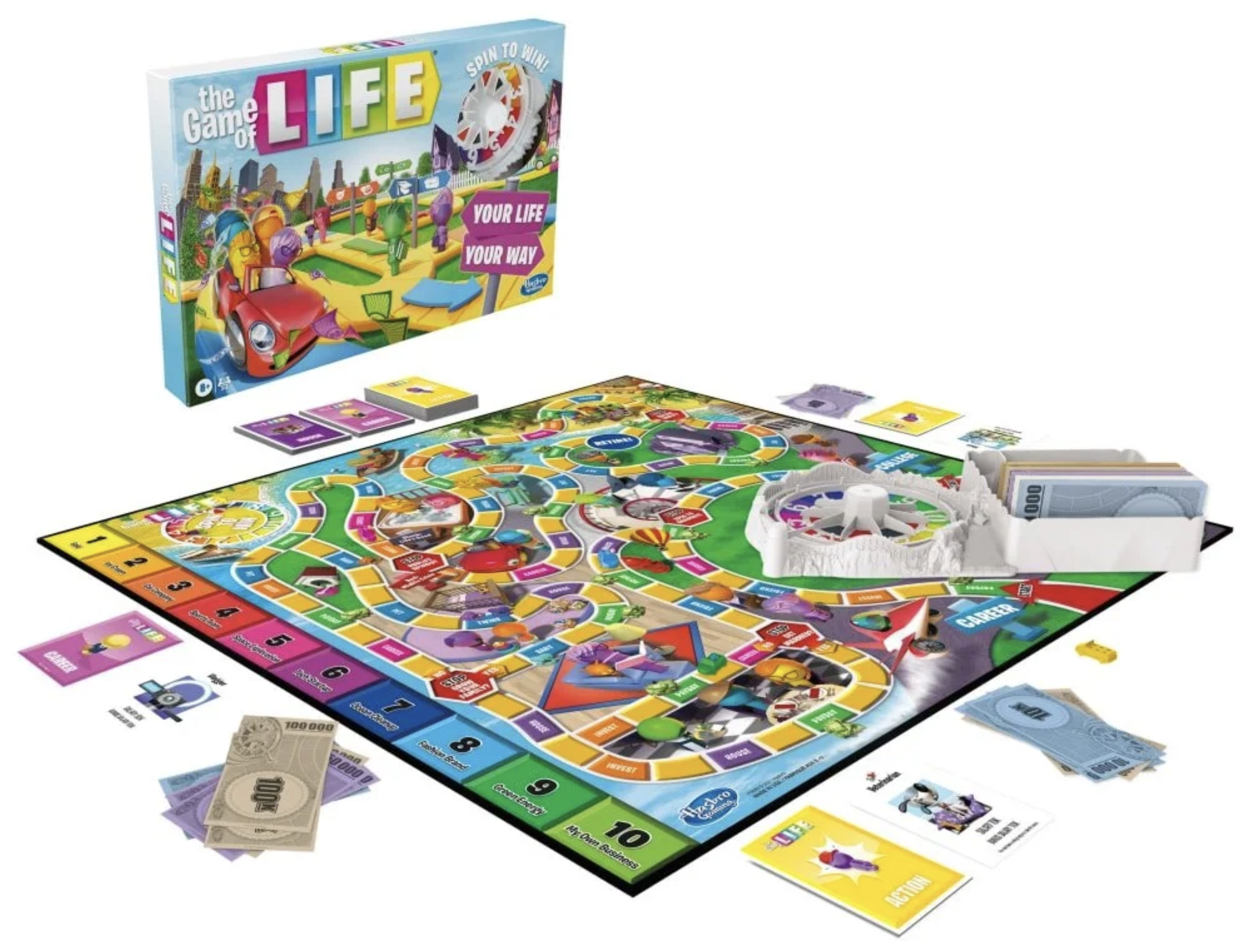
To purchase, click on the image.


Appendix 4

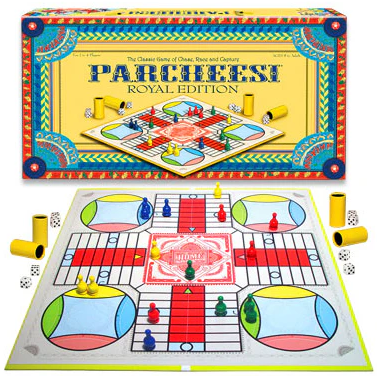
To purchase, click on the image.


Appendix 5

Hello, World!

Appendix 6

Hello, World!

Appendix 7