Revisionary Edition








Ways to Order
Topic Bundles: Discounted mini-collections from each book
Book 1: Numbers to 10
Book 2: Place Value
Book 3: Addition & Subtraction
Book 4: Multiplication & Division
Book 5: Times Tables
Book 6: Measurement, Data, & Geometry
Book 7: Fractions & Decimals
Book 8: Rational Numbers, Ratios, & Percent
Book 9: Algebra, Exponents, & Geometry
Book 10: Kindergarten
Individual Sprints are $0.99/each. The subtopics in each book are available as discounted bundles.
Digital Bundles
A pdf and editable word file of each Sprint in the collection.
Complete Revisionary Edition - $499.99
$56.99
53.99
$51.99

$50.99

$47.99
$61.99
$65.99
$76.99
$62.99
$64.99
Individual Digital Downloads
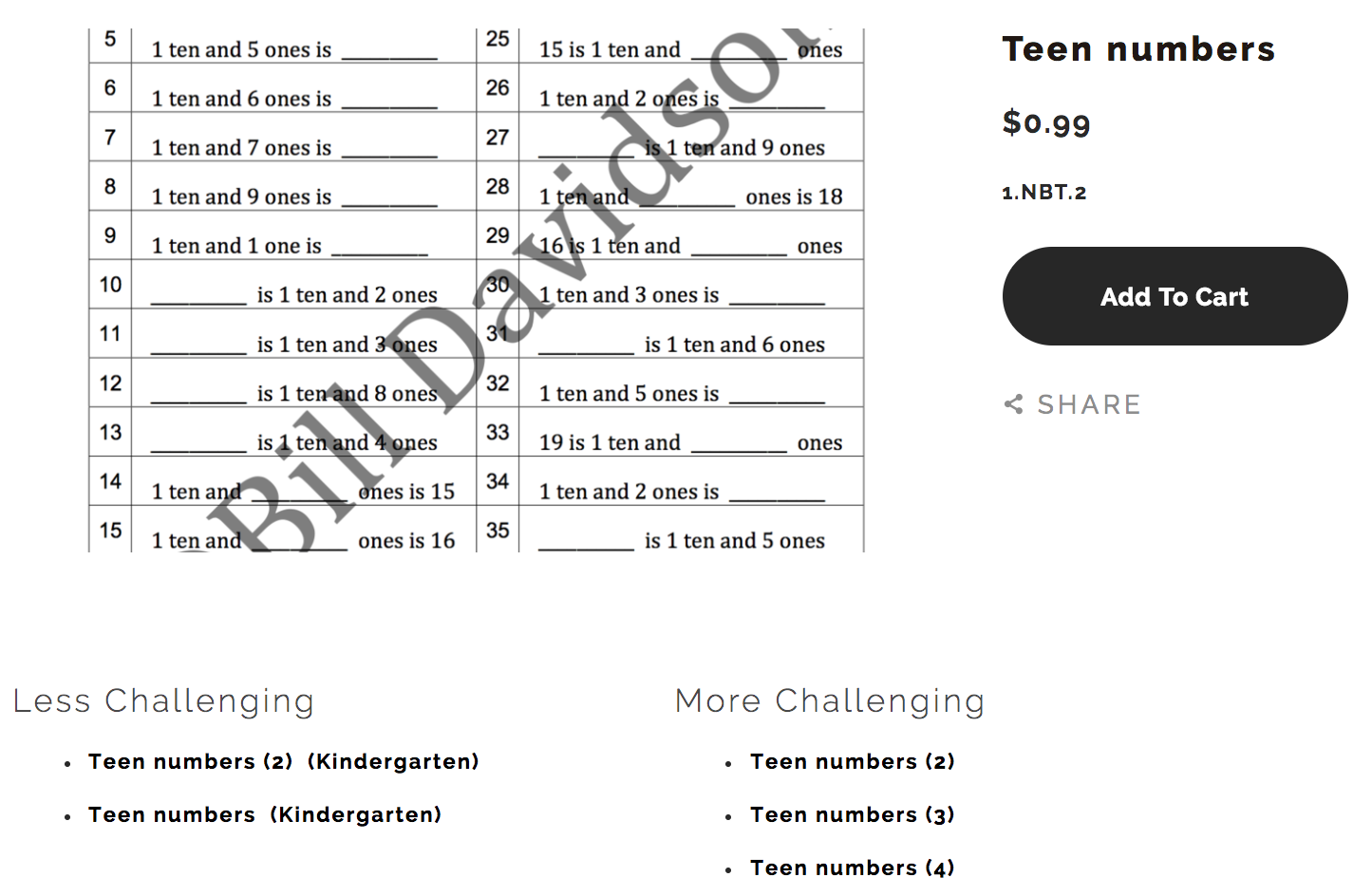
Each download consists of:
An editable word file that allows teachers to create remediation and/or extension problems, depending on their students' skill levels.
A four-page pdf - two Sprints and their answer keys.
Note: Kindergarten Sprints do not come with answer keys.
Spiral Bound Black Line Masters
Book 1: Numbers to 10
Book 2: Place Value
Book 3: Addition & Subtraction
Book 4: Multiplication & Division
Book 5: Times Tables
Book 6: Measurement, Data, & Geometry
Book 7: Fractions & Decimals
Book 8: Rational Numbers, Ratios, & Percent
Book 9: Algebra, Exponents, & Geometry
Book 10: Kindergarten Sprints are only available digitally.
Answer Key Books
Book 1: Numbers to 10
Book 2: Place Value
Book 3: Addition & Subtraction
Book 4: Multiplication & Division
Book 5: Times Tables
Book 6: Measurement, Data, & Geometry
Book 7: Fractions & Decimals: See footnote below.
Book 8: Rational Numbers, Ratios, & Percent
Book 9: Algebra, Exponents, & Geometry
Book 10: Kindergarten Sprints are only available digitally and do not have answer keys.
*Due to size restrictions, pages 181-258 have been removed. Please contact Bill Davidson at bdavidson40@gmail.com for these pages.
Purchase Orders
Send Purchase Orders to: bdavidson40@gmail.com
Sprints: A System for Increasing Fluency
Sprints are a learning tool designed to help students internalize skills and concepts, while developing number sense. Through simple to complex progressions and deliberate, sequenced practice, Sprints are designed to build student confidence and enthusiasm for mathematics.
Frequently Asked Questions & Comments
-
Traditionally, math speed drills have been presented as sets of randomized facts that provide students intensive practice and/or test their automaticity. Sprints are designed for centered practice but they are structured through carefully sequenced problems that start simple and gradually grow in complexity. Below are some other ways in which Sprints differ from traditional written fluency:
Sprints are designed to be used as a self-assessment not a formal one. They are meant to help each student feel successful, but also challenged. • Most speed drills focus on basic operation problems that are presented abstractly and/or uniformly. Mathematics consists of hundreds of interwoven skills and topics that relate to (and build on) one another. Sprints address this expansive range and provide students the opportunity to practice and master a plethora of skills, concepts, and formats. In short, Sprints are a much greater reflection of mathematics than traditional speed drills. • The Sprint routine is a two-part activity. Problem-by-problem, the degree of difficulty correlates between Sprints A and B. A concise, carefully sequenced ten-step routine incubates student improvement, which is designed to build student confidence. I am a strong advocate for helping students build automaticity with basic facts, especially with the following topics: • Adding and subtracting within 10 • Addition crossing the 10 facts • Subtraction crossing the 10 facts • Times tables • Simplifying fractions with denominators 24 and under Over the past nine years, I’ve found that Sprints are a much greater vehicle for reaching this goal than traditional math speed drills.
-
Sprints are designed for ALL students to feel successful, but also challenged. The notion of a “hard” Sprint is paradoxical to the tool’s definition. Stated differently: A “hard Sprint” is really not a Sprint, because the tool should only be delivered after students have achieved mastery of the topic. I recommend carefully examining Sprints before delivering them to your students. Ask yourself: Will each student in the class correctly answer one problem every five to six seconds? If the answer is “No”, then you already know one or more of your students will become frustrated during the activity. Select a different Sprint or replace a few problems with easier ones so that all students will be able to feel successful. Confidence is vital to succeeding in elementary mathematics. Next, examine the last ten to 15 problems. Ask yourself will any of the students be able to complete the Sprint in under one minute? If the answer is “Yes”, consider making the last five to ten problems harder. Or, at the very least, give students a challenging multiple to count by should they finish early. Every student should work for one minute. For the routine to be dynamic, children need motivation to work hard on Sprint B. This won’t happen if they are under-challenged and/or have no opportunity to improve. Instill confidence through effusive success and humility through consistent challenges and math class will always be dynamic! For the following reasons, I am deeply opposed to giving weak students different Sprints than the majority
of the class, even if the topic and answers are the same for everyone. ©Bill Davidson If a student is given an easier Sprint than some of their classmates, the ceiling of what they can achieve is lowered - especially if they want to take the unfinished Sprint home to practice. If a student becomes aware that they are working on different problems than their classmates, the students who receive the easier problem set become stigmatized.
-
Sprints are NOT meant to be a formal assessment. I have delivered Sprints over 2,000 times but have never once collected them. They are meant to build confidence while providing students with immediate documented success. The moment that you collect a Sprint, the child’s mood will change from joyful to stressful, leading them to approach the activity timidly rather than freely. Sprints should feel like recess, not academia. The former leads to enthusiasm; the latter to anxiety
-
Anxiety normally stems from lacking confidence and/or fearing failure. Teachers can minimize or eliminate Sprint anxiety by considering the following: Begin every school year by carefully selecting the first ten Sprints that will be delivered. Make sure that the Sprint topics are well below grade level. This will go far to helping all students (especially those who have previously struggled with mathematics) develop a “success association” with Sprints. When harder Sprints are introduced later in the school year, struggling students are more likely to enter the activity with a positive mindset and thus persevere if the problems seem challenging.
NEVER deliver a Sprint in which the slowest processing student cannot answer one problem every four to five seconds, and NEVER underestimate the power of a teacher/student relationship in relieving anxiety. Students who feel safe in their classroom and loved by their teacher are usually happy to participate in class activities. Find a time during the day to meet with children one-onone. Tell the struggling student: “You’ve been working very hard and I deeply want to see you succeed. Don’t worry about finishing the Sprint or being the fastest in the class. Keep trying your best and you’ll continue to improve.” Hand the child the next day’s Sprint. Tell them: “I’m going to deliver this tomorrow. If you want, take it home and practice.” This simple gesture shows the child that their teacher is recognizing their efforts and invested in their education and happiness. That, in itself, goes far to reducing anxiety. As Dr. Sagher said: The very worst thing that can happen in such an exchange is that the child goes home and memorizes 88 problems. Allowing students to not participate in the Sprint routine creates a less stressful environment. By keeping the activity optional, the psychological implications of the activity shifts. Those who want to have fun and/or improve, participate. Those who are uninterested in the latter can do nothing. Over the past nine years, I’ve distributed approximately 100,000 sprint worksheets (2,000 routines times 25 students times 2 worksheets). Of these, 99,000 were presented to middle school students, an age group notorious for being jaded and resistant. Less than 20 sheets were handed back to me. The suggestion could, of course, backfire. If a significant number of students choose not to
participate, the classroom energy would suffer and so would enthusiasm. I never required my students to take Sprints, but I only made them aware of this option once several months of the school year had passed. After strong relationships and classroom routines were established, I told my students that they were free to opt out. If you find that a student opts out too frequently, remind them that Sprints are good practice, even if it isn’t their favorite activity.
-
There is no set rule for how often Sprints should be delivered. Teachers need to decide the best use of instructional time for their students. Some teachers deliver Sprints daily. Others do so two or three times per week. Regardless, teachers who choose to use Sprints should consider the ramifications of not doing so regularly. The most effective Sprint routines consist of clear expectations and tight transitions. Thus, it is very challenging to maximize the tool’s effectiveness if teachers and students aren’t familiar with the routine. As a classroom teacher with 55-minute instructional periods, I delivered Sprints every day of the school year. This included assessment days, as well as the first and last days of school. Although this worked well for my students in a particular time and place, I can’t be sure that the same would hold true for all teachers and students in every school. However, as a math coach, I’ve found that teachers who deliver the routine well tend to receive student complaints on days that Sprints aren’t part of math class.
-
To deeply understand the purpose of Sprints, it is crucial for teachers to distinguish between the tool’s mathematics and theatrics. Sprints are designed to bolster students’ mathematical fluency. They are meant to provide intensive, focused practice on specific skills and concepts, while improving students’ number sense through carefully sequenced and patterned problems. This tends to work best when students are trying their hardest, because adrenaline magnifies focus and strengthens memory.
The ten-stage routine that I've outlined consists of theatrics to stimulate student focus and adrenaline. Not every theatric works perfectly for every student and/or teacher in every classroom. However, that does not mean that Sprints can’t benefit all students. While some educators are opposed to competitive classroom activities, most would agree that practice is an essential catalyst for building number sense and mastering skills. For those teachers, administrators, etc. who are against competition, I recommend delivering Sprints untimed and/or without competitive theatrics. For the five years that I delivered Sprints as a classroom teacher, I presented the tool as a competitive drill. Each day, I recognized students who answered the most correctly and/or improved the most. My intentions were never to exalt or demean any student. It was simply a piece of theater to generate excitement in the same way that placing pocket change in the center of a poker table improves focus and effort during a friendly game of cards. The perception that something is at stake deepens participant concentration. I believe that all good teachers find ways to acknowledge each of their students’ talents on a regular basis. My students who were rarely recognized during Sprints, were always celebrated during other parts of the day.
-
Item descriptOne minute is a realistic amount of time to expect students to focus deeply and maintain an adrenaline state. Extend the time, and attention will wane. Reduce the time, and students won’t maximize their concentrated output.ion
-
There is no set rule for how many Sprints a teacher can or should deliver during a school year. However, I recommend no less than ten, so that students don’t become overly familiar with any individual drill. Consider keeping a list of all the Sprints you use during the school year. So long as they’re not repeated too frequently, giving the same Sprint at intermittent times throughout the year serves as an excellent review of previously learned concepts. Starting on the first day of school, make a list of every Sprint you deliver. Once the list reaches ten, start back at the beginning and continue rotating through the list whenever you’re not introducing a new Sprint into the rotation. In his book, Make it Stick, The Science of Successful Learning, Peter Brown expounds on this idea: Periodic practice arrests forgetting, strengthens retrieval routes and is essential for hanging onto the knowledge you want to gain. When you space out practice at a task and get a little rusty between sessions, or you interleave the practice of two or more subjects, retrieval is harder and feels less productive, but the effort produces longer lasting learning and enables more versatile application of it in later settings.
How do Sprints differ from other written fluency drills?
Some Sprints are too hard for some of my students. Should I give different Sprints to different students?
How often should I collect Sprints?
How do you deal with student anxiety while taking a Sprint?
How often should I deliver Sprints?
I don't deliver Sprints because I'm philosophically opposed to competition in the classroom.
How long should each Sprint last?
How many Sprints should I deliver during a school year?
Additional Literature
The Math Gene by Keith Devlin
Why Memorizing Stuff Can be Good for You by Natalie Wexler
Fluency without Equivocation by Scott Baldridge, Ben McCarty, & Robin Ramos
Grit: The Power of Passion and Perseverance by Angela Duckworth
The End of Ignorance by John Mighton
Make it Stick by Peter Brown
Mastery by Robert Greene
Little Soldiers by Lenora Chu
Thinking Fast & Slow by Daniel Kahneman
Peak: Secrets from the New Science of Expertise by Anders Ercisson & Robert Pool
Mathematics vs. Theatrics, A Response to Dr. Jo Boaler by Bill Davidson
Why Students Forget - and What You Can Do About it by Youki Terada
How Teachers Can Make Learning Happen Based on The Science of Learning The Science of Math
See Sprints in Action
Vanessa Newton. Santa Catalina School in Monterrey, CA.
Nikki Rivera, Valley Charter in Northridge, CA.
Lydia Mansour. Santa Catalina School in Monterrey, CA.
Lisa Watts-Lawton, Gardner Elementary School in Los Angeles.
Rachelle Bertumen, Sandra Cisneros School in Los Angeles, CA.
Danielle Samra, Kuumba Academy in Wilmington, DE.
Santa Catalina School in Monterrey, CA.
Aurelia Bonitatis, FACT Charter School in Philadelphia.
Jen Meylan, Valley Charter School in Northridge, CA.
Lauren Schauer, Valley Charter School in Northridge, CA.
Bill Davidson, FACT Charter School in Philadelphia, PA.